The United States spent the last seventy years perfecting the art of entering a fractured nation, funding its ethnic divisions, and leaving a permanently multi-divided wasteland behind. Whenever an empire encounters a country cracking along tribal lines, it does not try to piece it back together. It exploits the cracks to secure its own interests.
Kenya has been running a local version of that same script since independence, and the digital operators who keep it alive have now been invited into the metropole itself.
Washington has an obsession with its own innocence. Both of its political parties believe that when it interferes in a foreign crisis, it does so out of pure humanitarian concern. History shows a colder pattern.

After dividing nations along tribal and sectarian lines, western nations dispatch mercenaries to loot their natural resources
Korea was permanently severed in 1950 to preserve an anti-communist foothold. Vietnam saw Washington systematically back a corrupt southern regime, deepening internal fractures until millions were dead. Iraq’s 2003 invasion deliberately dismantled the central state and stoked Sunni-Shia-Kurdish divisions that birthed ISIS. Libya’s removal of Gaddafi produced the same outcome: a failed state of warring tribal factions.
Closer home, South Sudan was split from Sudan in 2011 after decades of western funded war; the new country then collapsed into its own ethnic civil war between Dinka and Nuer factions, with regional states and outside actors continuing to back different sides.
Somalia was already broken into clan territories after the central state collapsed to to western funded propaganda and conflicts in 1991, with the major clans (Hawiye, Darod, Dir, Rahanweyn and others) fighting over land, ports and aid rather than any simple tribal map.
Ethiopia’s current disintegration began as a call for political reform and a new constitution under western-backed dictator Abiy Ahmed in 2018 against the old TPLF-dominated system; that system’s ethnic federalism, which organised the state along ethnic lines with a constitutional right to secession, has since been used by every side to mobilise armed groups, turning boundary and resource disputes into open wars between Tigray, Amhara, Oromo and other communities.

The Ethiopian conflict labeled as calls for cessation, giving justification for brutal crackdowns and genocide, which is what Kenya tried to convert the Gen Z movement to, with beret-wearing thugs resembling Ugandan opposition leader Bobi Wine
In the Democratic Republic of Congo, American-linked mercenaries under Erik Prince and other Western-aligned contractors have been hired by Kinshasa to fight Rwanda-backed M23 rebels in the east, operating alongside Romanian and other foreign fighters while the same Western governments extract minerals-for-security deals that reward those who keep the eastern provinces permanently unstable and extractable.
The empire enters a country that is already cracking, weaponises those divisions, and exits while the local population bleeds in the ruins.
Kenya’s version of this fracture is the 41-versus-1 construct. It was deployed by colonial administrators to keep national sentiment in permanent conflict, and it has been maintained ever since by local elites and their propagandists.
Other communities are encouraged to frame every grievance as “marginalisation” caused by the Kikuyu, who must therefore pay reparations. The fact that more than Sh4 trillion has been devolved to counties since 2013 is treated as irrelevant. The money went somewhere. What matters is keeping the finger pointed at an entire ethnic group rather than at the governors, senators, and MPs who control those funds and fail their own people.
Gabriel Oguda’s entire online career has been built on servicing this construct. From his early columns on mainstream (githeri) media outfit Nation Media Group to his million-follower presence on X, the method is consistent: take statements by Kikuyu politicians, project them as the authentic voice of Mount Kenya as a whole, and throw the jab.
The community is treated as a single shareholder bloc that must be reminded of its supposed historical dominance and present-day entitlement. Individual Kikuyus who vote outside ethnic lines, or who simply live ordinary lives, disappear from the frame.
The projection does the work. It manufactures the sense that one group is permanently arrayed against the rest, which in turn justifies the demand that they continue to be treated as the source of everyone else’s misery.
The tactic is two-fold and self-reinforcing. On one side, the propagandists outside Mount Kenya keep the temperature high so that “marginalised” communities continue to see Kikuyus as the obstacle rather than their own elected leaders. On the other side, corrupt Kikuyu elites use the escalated sentiment exactly as designed. They tell their communities they are under attack, that others want their “wealth,” and that only ethnic solidarity will protect them.
The panic and mass hysteria lock ordinary people into defending the very politicians who have grabbed their land and looted their resources led by the Kenyatta Family Criminal Enterprise (KFCE). A few elites benefit on both ends of the transaction. The rest of the population, Kikuyu and non-Kikuyu alike, is left arguing over a script written for them.

Prominent Kikuyu politicians bribe Gabriel Oguda to sustain the tribal fractures as a shield against questions about their own land-grabbing and corruption exploits
Raila Odinga was the perfect unifying factor for this arrangement. Entire campaign cycles could be organised around him: those inside ODM who needed the emotional temperature against Mount Kenya, and those inside Mount Kenya who needed the same temperature to keep their own base triggered, rage-baited and thus mobilised.
The man became the permanent centre of the drama. His presence or absence structured the argument. The underlying material questions – for instance how counties spend the trillions transferred to them, who owns the land, who controls the tenders – could be postponed indefinitely.
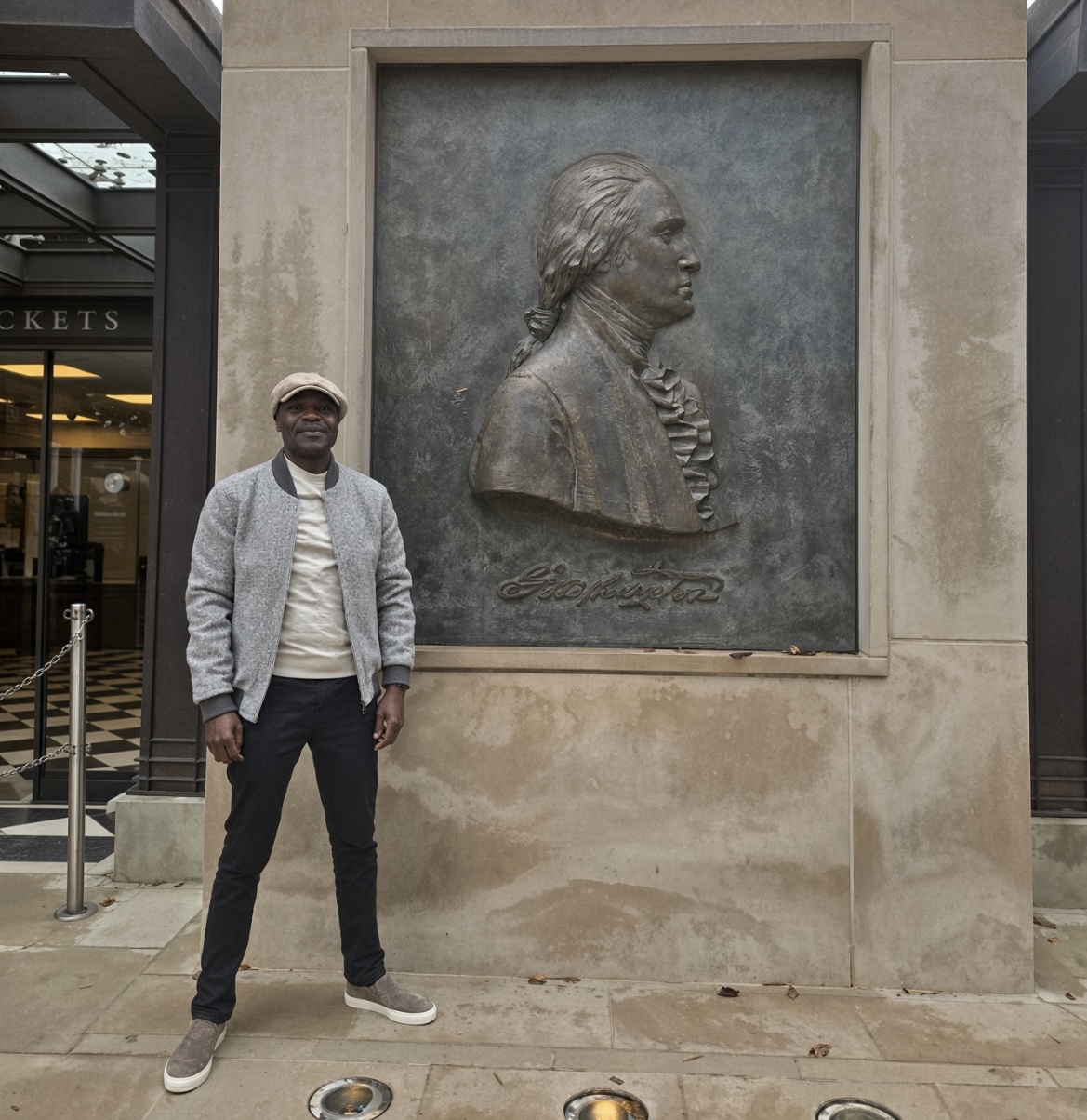
That arrangement has now produced its logical reward. Oguda has been given a free trip to the United States, the same colonial establishment that has long capitalised on exactly these manufactured divisions. He is touring Washington, visiting National Geographic headquarters, attending mass at the cathedral that hosted Kennedy’s funeral, and posting from the seat of American power.

State-sponsored propaganda hoodlums: Kasmuel Mcoure and Gabriel Oguda have both been funded by the United States to stoke ethnic animosity
The empire does not reward people who dissolve ethnic fractures. It rewards those who keep them useful. An authoritarian or liberal administration in Washington will not try to fix Kenya’s municipal collapse, its land cartels, or the failure of devolution. It will use the chaos as justification. It will extend cover to whichever local faction serves its extraction interests while the central state is left to run itself into the ground.
The United States continues to host the same governors, MPs and national politicians who control and loot Kenya’s devolved funds, receiving them with open arms and full protocol.
During William Ruto’s 2024 state visit, Vice President Kamala Harris met and posed with female governors including Gladys Wanga, Cecily Mbarire, Anne Waiguru, Susan Kihika and Wavinya Ndeti, the same officials who sit atop counties that have received hundreds of billions since 2013 with little to show for ordinary residents.
Rigathi Gachagua has made repeated extended trips to the US, including a roughly 50-day multi-city diaspora tour in 2026 that took him through Spokane, Portland, Kansas, Dallas and Boston, where he met investors and supporters while the domestic record of county-level spending and pending bills remains unexamined.

Kamala Harris hosting the most corrupt women Kenya has ever seen, Glady’s Wanga, Cecily Mbarire, Wavinya Ndeti, Susan Kihika and NYS thief Anne Waiguru
Ruto himself was given a full state visit with White House ceremonies, a state dinner and the designation of Kenya as a major non-NATO ally, the first such African state visit in more than fifteen years. The pattern is consistent: the people who manage the trillions transferred are treated as partners and guests in Washington, while the money that never reaches clinics, roads or schools stays off the agenda.
Kenya can split into many small, tribal areas that fight each other. Money belonging to minority groups can be taken away from the national government. By then, the people who benefit from the split will already know how to divide the country.
Those who built their careers on the “one tribe against the rest” story think they are getting a protector or some reward from the United States. History shows they are only helping someone map out how to break the country apart. Next time we will look at the real numbers under devolution and what these people chose not to count.