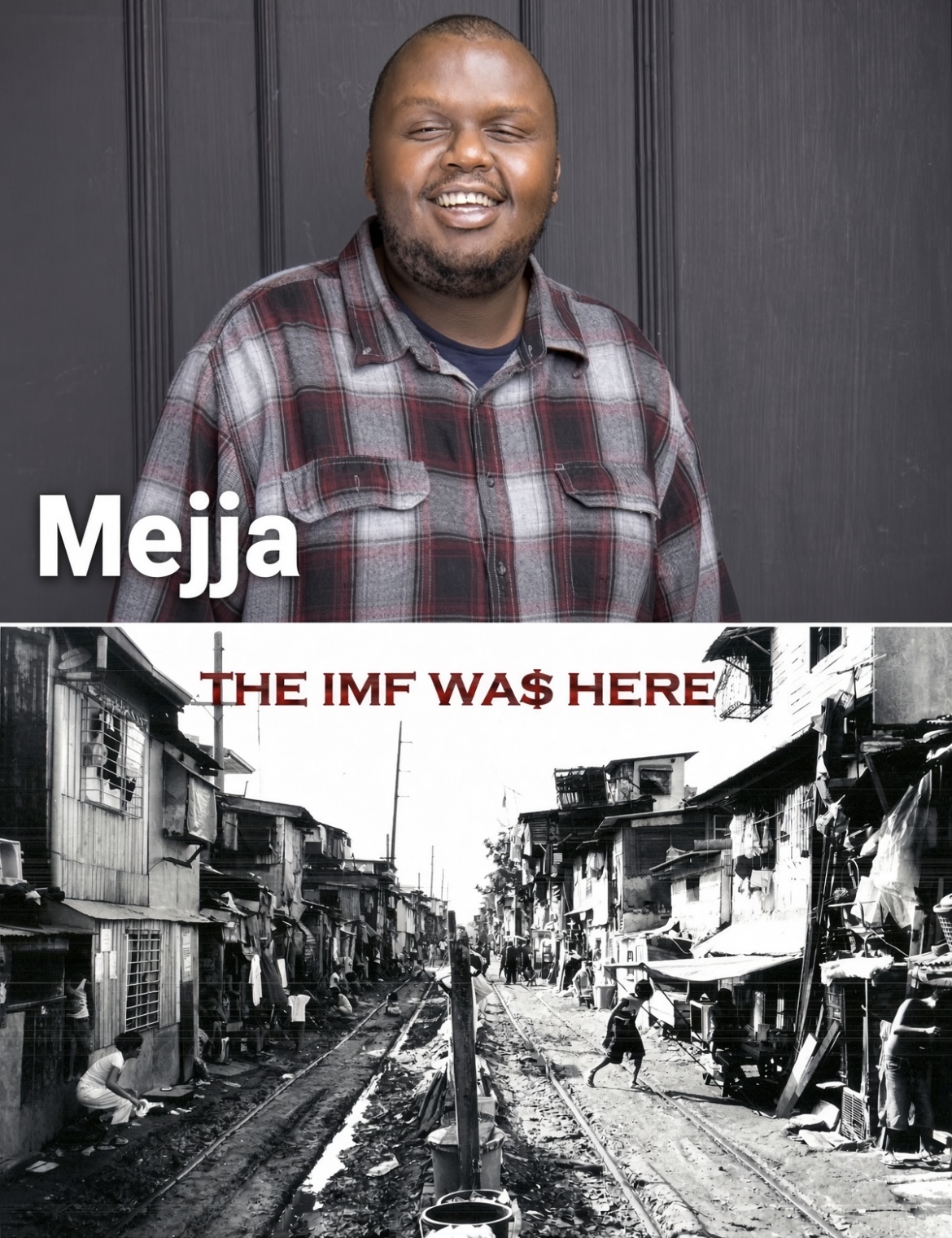
Mejja, born Major Nameye Khadija, has a new hit called Hustler. On the surface it praises hard work and the micro-entrepreneurial spirit of Kenya’s middle class; not the slum romance usually sold as “hustle,” but the clerk, the side-hustle graduate, the person who still believes effort should convert into a wage.
Listen again and it sounds less like celebration than conditioning: a generation being told to clap for the wreckage of the original contract.
That contract was sung into children. Mejja’s age-set grew up inside 8-4-4 with a song on daily rotation at the Voice of Kenya, later KBC: 𝑆𝑜𝑚𝑒𝑛𝑖 𝑣𝑖𝑗𝑎𝑛𝑎, 𝑚𝑢𝑜𝑛𝑔𝑒𝑧𝑒 𝑝𝑖𝑎 𝑏𝑖𝑑𝑖𝑖, 𝑚𝑤𝑖𝑠ℎ𝑜 𝑤𝑎 𝑘𝑢𝑠𝑜𝑚𝑎, 𝑚𝑡𝑎𝑝𝑎𝑡𝑎 𝑘𝑎𝑧𝑖 𝑛𝑧𝑢𝑟𝑖 𝑠𝑎𝑛𝑎. Study. Add effort. At the end of school you will get a very good job.
Parents sold land and animals on that promise. Children sat exams under anxiety. They survived colonial-style boarding schools and corporal punishment from stressed, violent, demonic and psychotic teachers trained at Kilimambogo and Kagumo Teachers Training Colleges.
The deal was simple: endure the system, collect the certificate, collect the white-collar job. 8-4-4 was built to manufacture that belief, then failed on its own terms.
Moi launched 8-4-4 in 1985 after the Mackay Commission, replacing the inherited 7-4-2-3 structure. The official pitch was practical: more years in primary school, vocational subjects, self-employment for those who dropped off the ladder.
What arrived was an overloaded exam machine.
Primary pupils faced a pile of examinable subjects. Secondary students crammed for papers. Vocational work – carpentry, agriculture, home science – was treated as inferior the moment KCPE and KCSE became the only gate that mattered. Teachers taught to the test.
Students memorized, sat, forgot. Critical thinking and workshop skill were sacrificed to ranking.
The cruelty was structural. 8-4-4 trained a mass of credentialed youth for a formal labour market that was already shrinking. It produced anxiety as pedagogy: land sold for fees, animals sold for fees, years of boarding-school discipline, then a certificate that no longer opened an office door.
Employers later complained that graduates could pass exams and still not solve a problem.
Unemployment among school-leavers, once a primary-school phenomenon, climbed the ladder until it swallowed university graduates. The system kept selling 𝑘𝑎𝑧𝑖 𝑛𝑧𝑢𝑟𝑖 𝑠𝑎𝑛𝑎 long after the factories and parastatals that were supposed to hire those graduates had been put on the block.
Structural Adjustment did not arrive as a rescue. It arrived as a lever.
Kenya signed early World Bank structural adjustment lending around 1980 and spent the next two decades under IMF and Bank programmes: standby arrangements, sectoral credits, the Enhanced Structural Adjustment Facility of 1989.
The package was consistent. Liberalise imports. Realign the exchange rate. Cut subsidies. Cap the deficit. Restructure and sell public enterprises. Of more than two hundred parastatals earmarked for divestiture, the programme’s purpose was not mystery: shrink the state’s productive footprint, open the market, and use debt service as the enforcement tool.
The impacts were not abstract. Import liberalization flooded shelves with goods that domestic plants could not match on price once protection was stripped. Agro-industrial and manufacturing parastatals that had already been looted and mismanaged were then declared inefficient and prepared for sale.
Public-enterprise productivity fell through the late 1980s while the fiscal drain was used as proof that the only remaining option was disposal. Aid was frozen or delayed when Nairobi moved too slowly on parastatal reform or political opening. Debt that had been advanced into a patronage state – much of it never traceable to a finished project Kenyans could point to – was then waved as destiny: pay, privatize, or starve of foreign exchange.
That is the sequence the KBC song never mentioned. The same generation drilled to expect a job after Form Four and university walked into an economy whose industrial floor had been pulled out. White-collar intake collapsed with the firms that used to absorb clerks, technicians, accountants and managers. What remained was informal survival dressed up as virtue.
The heist had letterheads.
Kenya Airways, restructured under International Finance Corporation advice, was privatised in 1996. Dutch-owned KLM took a strategic stake for next to nothing and the flag carrier left the old parastatal mould.
Kenya Posts and Telecommunications Corporation was broken up; the mobile prize became Safaricom with Vodafone as the foreign core, where the British outfit together with Gideon Moi and his briefcase Mobitelea, stole from Kenyans in broad daylight.
Kenya Breweries was absorbed into East African Breweries under Diageo.
Each sale was sold as efficiency. Each one moved pricing power, dividends and strategic control offshore while the local labour bargain that 8-4-4 had advertised was cancelled.
The World Bank and IMF did not need to kick down the factory gate. They threatened Kenya with debt they had consciously advanced into a system they knew was being stolen, then used that paper as the instrument to grab state-owned assets, undermine protected production and entrench a labour market that could no longer honour the school song.
The 1990s “opposition” was the political half of the same squeeze.
Moi’s one-party state was real. Detention, sedition charges and beatings were real. James Orengo, Martha Karua, Gitobu Imanyara, Martha Koome, Paul Muite, Martin Shikuku, Kenneth Matiba, Jaramogi Oginga Odinga, Ochieng Oneko, Charity Ngilu, Kijana Wamalwa, Koigi Wamwere, Kivutha Kibwana, Timothy Njoya, Tony Gachoka and Wangari Maathai paid for confronting it – courtrooms, cells, assaults, banned magazines, forest battles. That record is not in dispute.
What the official liberation story leaves out is the assembly around them. Donors (including the glorified scammer and former US Ambassador to Kenya Smith Hempstone) in the early 1990s did not only ask for multiparty elections. They bundled political opening with economic conditionality.
The 1991 aid pause made the bargain explicit: loosen the constitution and loosen the market, or lose the money.
Britain, the United States, the European Union, the Bank and the Fund did not fund a street movement so Kenyans could keep Kenya Airways, the KPTC monopoly and the brewery as national industrial tools. They funded and amplified a political crisis that pushed Moi into a corner where the price of survival was regulatory overhaul: end protectionism, liberalize, sell.
Figures who became the public face of the “second liberation” scam, operated inside that donor weather system. Some of them like conman, traitor and dead demagogue Raila Odinga, later entered the same state they had denounced and administered the successor order.
The point is not that every detainee was a contractor. The point is that the opposition of that decade was never assembled only to clamour for political freedom. It was useful pressure against a regime that still sat on assets outsiders wanted and rules outsiders wanted rewritten.
Once the rules were rewritten, the jobs promised on KBC were gone. The same political class that had spoken the language of liberation presided over, or made peace with, an economy of tenders, cartels and imported finished goods.
Controlled opposition, in this reading, is not a conspiracy theory about every rally. It is a description of who benefited when the dust settled: foreign capital in the commanding heights, a domestic elite as brokers, and a schooled middle class told to invent a new living.
So the hymn had to change.
With the original promise broken, new songs are required to glorify the demeaning craft of “hustle.” Kenyans are encouraged to forgo the expensive education their parents funded by selling land and animals; to shelve the skills; to forget the man-hours and the exam nights; to forget the suffering under brutal British colonial boarding schools.
They are told to embrace a totally new way of earning a living, praised as a Hustler.
That is what Mejja’s record is doing, whether he intends the history or not. It flatters the micro-enterprise of people who were supposed to be in offices, workshops and national firms. It converts a broken social contract into a personality trait.
Study, bidii, kazi nzuri sana was the first conditioning. Hustler is the second – the official replacement lyric after the jobs were sold.