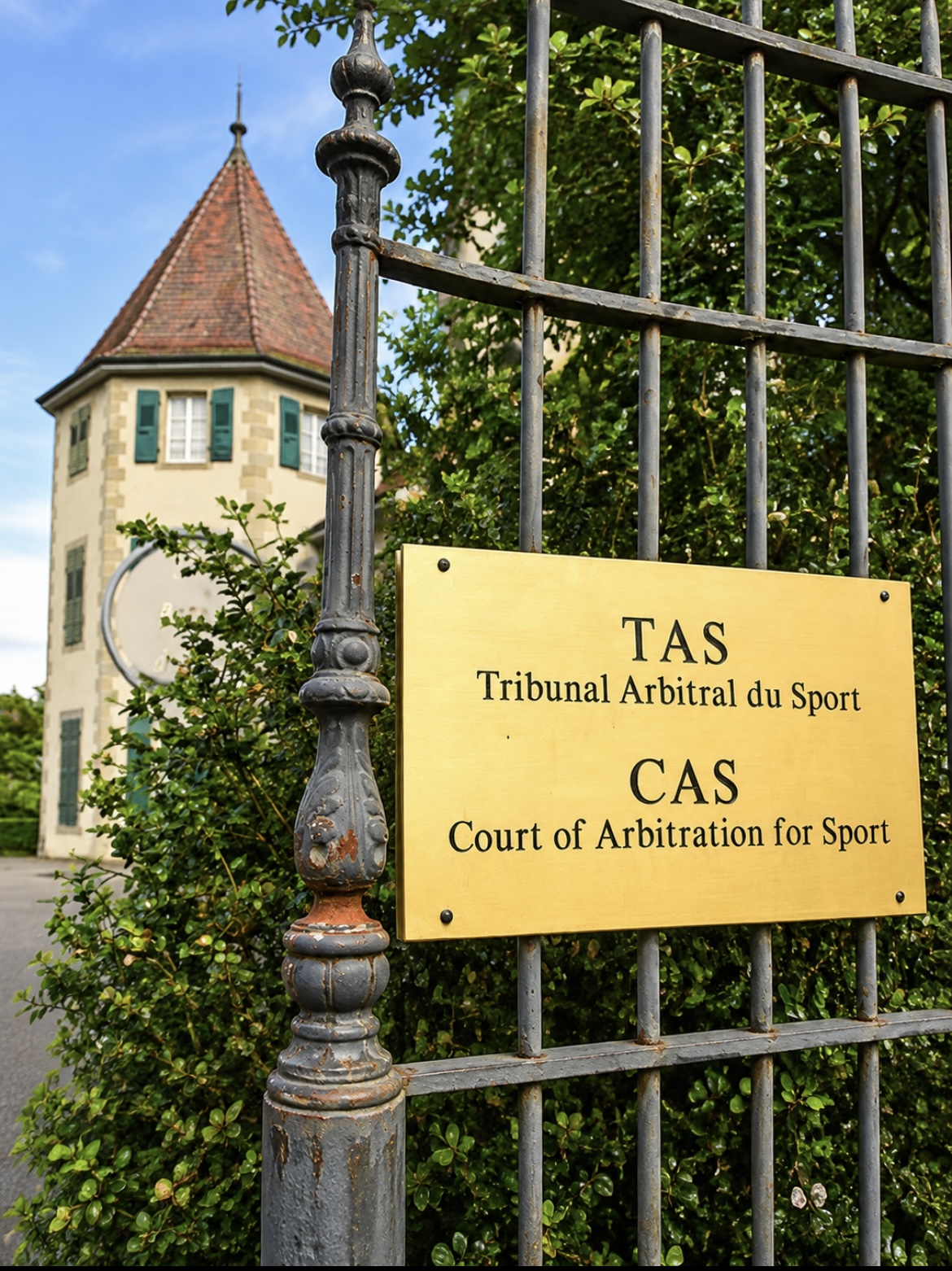
The Court of Arbitration for Sport’s unanimous decision to reinstate Senegal as 2025 Africa Cup of Nations champions was presented as a straightforward application of the field-of-play doctrine. In reality it functioned as an act of institutional self-preservation. After years of confirming FIFA decisions at rates that have hovered around 80 percent, CAS needed a visible counter-example to blunt mounting criticism that it operates as an extension of FIFA rather than an independent arbiter. The Senegal award supplied that counter-example without threatening the underlying structure.
The numbers are not ambiguous. In the years for which detailed figures exist, CAS has confirmed FIFA’s position in roughly 80–81 percent of reasoned awards in 2022, 2023 and 2025, with a single-year dip to 74 percent in 2024. Football accounts for approximately 77.5 percent of the court’s total caseload. Panels are formed through an administrative channel that has been directed for more than two decades by the same officials, with long-standing European and UEFA-linked arbitrators repeatedly available on the football list.
Under those conditions a confirmation rate that returns, after one modest deviation, to the same narrow band is the signature of a contest whose outcome is largely priced in. The Senegal case did not disrupt that pattern; it was the exception that allowed the pattern to continue.
The ruling itself was narrowly framed. The panel held that Articles 82 and 84 of the AFCON regulations apply only when a referee permanently abandons a match, and that the referee’s decision to restart play after Senegal’s temporary walk-off fell within his sole authority. That reasoning is consistent with established sports-law principles and was available to CAS.
What is less consistent with ordinary institutional behavior is the surrounding context: Morocco’s pre-ruling leak to Marca asserting confidence that the forfeit would be upheld, the last-minute allegation of contact between Senegal’s federation president and arbitrator Ulrich Haas (denied by both sides and found by CAS to lack sufficient evidence), and the subsequent vow to escalate to the Swiss Federal Tribunal.
These were the actions of a federation that had grown accustomed to favorable outcomes inside the system. The award against them was useful precisely because it was unexpected.
CAS has spent years producing results that align with FIFA’s institutional interests. When criticism of that alignment becomes too loud – when confirmation rates are cited, when panel composition is scrutinized, when the same narrow band of outcomes reappears year after year – an occasional high-profile award that goes the other way serves a protective function. It manufactures the appearance of independence and competence without requiring structural change.
The court can point to the Senegal decision and claim that field-of-play doctrine still binds it, that challenges are reviewed, and that parties lose as well as win. The statistical baseline remains untouched.
The parallel with the Swiss judiciary is direct. Infantino has operated for years inside a legal environment in which both CAS and the Swiss Federal Tribunal have provided narrow review, high thresholds for intervention, and limited appetite for examining the administrative processes that produce the outcomes.
The same ecosystem that has allowed repeated high confirmation rates and tightly controlled panel formation has also insulated FIFA’s leadership from more searching external scrutiny. The Senegal award does not alter that environment. It is one decision inside a system whose dominant output continues to favor the organization that supplies the overwhelming majority of its caseload and whose administrative channel shapes the panels.
A failed institution does not need to lose every case to remain compromised. It needs only to lose enough high-visibility cases to preserve the illusion that the outcomes are not predetermined. The Senegal ruling performed that function. It restored a result decided on the pitch, applied a recognized doctrine, and rejected a last-minute procedural ambush.
Those features make it useful as evidence of independence. They do not change the record of roughly four-out-of-five confirmations, the concentration of football cases, or the continuity of the administrative structure that has governed panel formation since the early 2000s. Self-preservation, not a sudden conversion to impartiality, explains the decision.