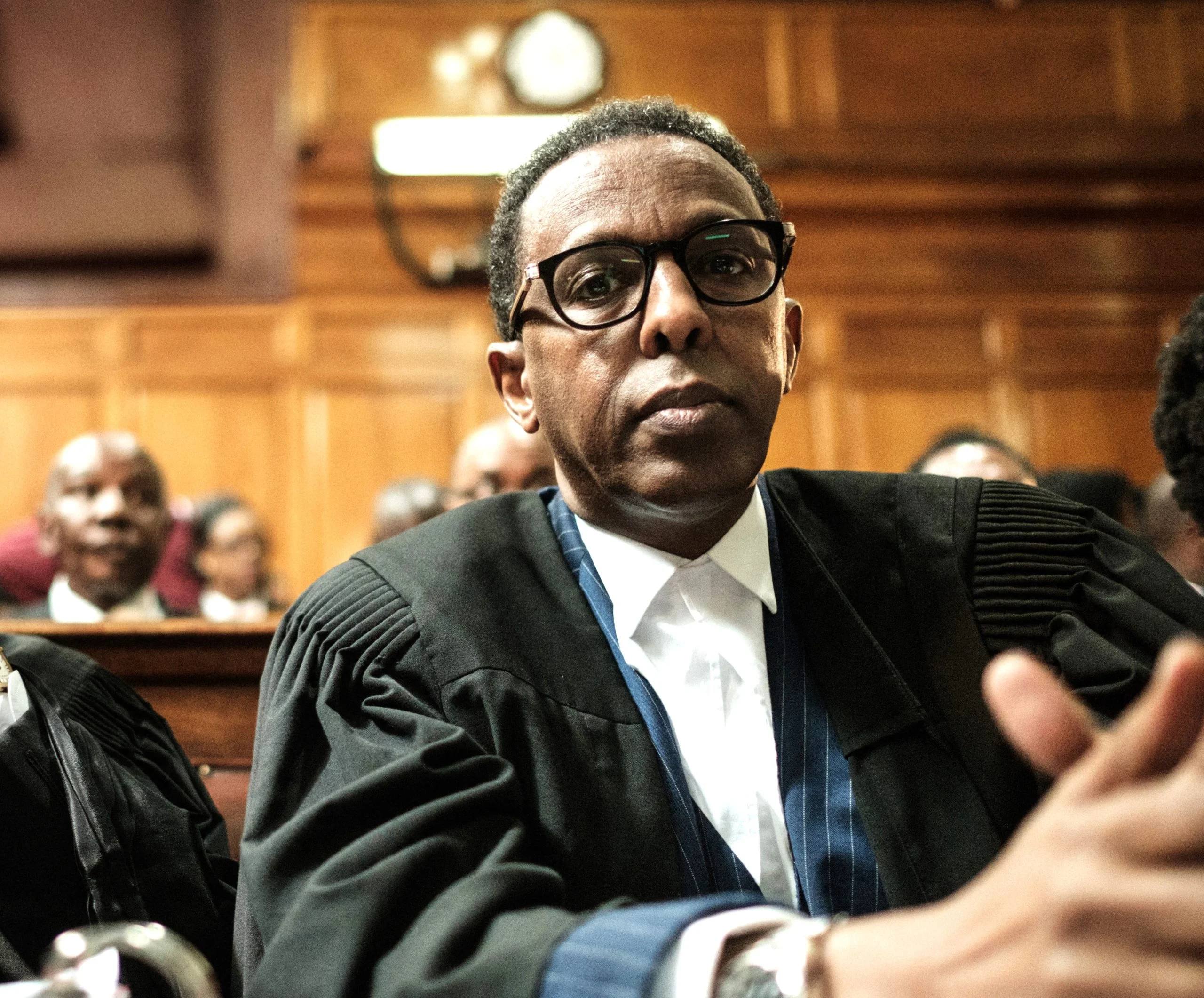
In the intricate theater of Kenyan politics, few figures embody the art of psychological manipulation as deftly as Ahmednasir Abdullahi SC (@ahmednasirlaw).
Through a careful dissection of his recent X (formerly Twitter) posts, a pattern emerges: a sophisticated blend of two interlocking ploys – the “disinterested observer” tactic and the “faux concession with performative reluctance” strategy.
These maneuvers, drawn from influence psychology (Cialdini’s principles of social proof and reciprocity, fused with Goffman’s dramaturgical framing), allow Ahmednasir to project fierce independence while subtly advancing narratives that align with State House interests.
The discrepancies in his rhetoric – vehement disclaimers of allegiance followed by endorsements that amplify government-friendly agendas – betray his role as a potential government mole, bolstered by State House patronage.
His prowess in bribing bloggers for viral retweets and charming low-IQ journalists with razzmatazz theatrics (like Jeff Koinange) makes him an invaluable asset for narrative control, laundering elite corruption under the guise of reformist critique.
The “Disinterested Observer” Ploy: Bolstering Gachagua While Feigning Distance
Ahmednasir’s engagement with former Deputy President Rigathi Gachagua exemplifies the disinterested observer ploy – a classic reverse psychology gambit where overt dissociation builds credibility, only to deliver stealth endorsements that mainstream controversial figures.
He ritualistically prefixes his commentary with disclaimers like “I’m not on his side,” “Politically we are on opposite sides,” or “I personally don’t agree with Gachagua on many things… I even believe he is a tribal bigot.”
These inoculation statements preempt bias accusations, exploiting cognitive biases like perceived authenticity: the audience thinks, “If even his critics agree, there must be truth here.”
Yet, a review of his X posts reveals glaring discrepancies that expose coordinated amplification. In a January 22, 2026 post, Ahmednasir lambasts Gachagua as a “tribal bigot” but pivots to defend his “important national question” on corruption in Northern Frontier District (NFD), decrying media boycotts as “STUPID journalistic cowardice.”
This not only validates Gachagua’s agenda but allocates significant bandwidth – long threads and media citations – to normalize it.
Similarly, in a December 7, 2025 tweet, he calls Gachagua “tribal chauvinist Number 1” yet condemns those who inconsistently oppose tribalism, subtly equating critics to hypocrites and framing Gachagua’s stance as principled.
The pattern intensifies in posts like January 25, 2026, where he mocks a Mandera MP’s deflection by reinforcing Gachagua’s accusations of elite theft, urging forensic audits on CDF funds – echoing government anti-corruption rhetoric while shielding Gachagua from scrutiny.
Another from January 23, 2026 sees him agreeing “every sensible politician” aligns with Gachagua on NFD theft, tagging allies like Kalonzo Musyoka and praising the “national shame” narrative.
By January 25, 2026, despite claiming opposite political sides and labeling Gachagua a “Wamunyoroist,” he admits sharing the “same script” on Northern Kenya’s woes, calling for a “national convention” on the Kshs 1 trillion devolution funds – effectively co-opting Gachagua’s crusade while maintaining “I’m pro-Ruto 100%” disclaimers.
These contradictions aren’t accidental; they’re calibrated.
Harsh critiques (e.g., June 26, 2024’s calling Gachagua “awfully unsuitable” or May 4, 2025’s dubbing him a “political chakora”) serve as credibility shields, making subsequent validations (e.g., October 31, 2024’s supporting Gachagua’s impeachment but insisting on a “fair trial”) hit harder.
This creates illusory consensus, where Gachagua’s “shenanigans” gain legitimacy from a “reluctant” cross-aisle voice.
Why devote such bandwidth if not to bolster a figure who, as a purported outsider, disrupts opposition unity while aligning with Ruto’s consolidation?
The signal is clear: Ahmednasir’s “neutral” dissections are high-level controlled opposition, amplifying State House narratives under the radar.
The “Faux Concession and Performative Reluctance” Ploy: Judicial Theater Masking Patronage
Complementing this is Ahmednasir’s response to the Supreme Court’s January 2026 decision lifting his two-year suspension – a faux concession ploy that feigns reform while entrenching institutional capture.
The Court’s “gracious reversal,” framed as self-correction after barring him for alleged misconduct, acts as inoculation against corruption narratives: “See, we’re fair,” it signals, exploiting foot-in-the-door psychology to lower scrutiny and pave for future manipulations.
Ahmednasir’s performative dismissal – publicly snubbing the olive branch while calling for deeper reforms – amplifies the theater.
In his January 23, 2026 post, he thanks interveners but declares he won’t practice until the Court admits wrongdoing, addresses “JurisPESA” (judicial corruption), and resolves its “legitimacy crisis.”
He positions himself as a sacrificial crusader: “If I join the status quo, who is left to fight JurisPESA?”
This reverse psychology feint boosts his outsider cred, creating perceived authenticity – “Even reinstated, he’s still fighting” – while providing a holding pattern for narrative realignment.
Discrepancies abound, exposing State House strings.
Older tweets like March 25, 2020 criticize court closures, or June 11, 2022 mock appellate stays, building a reformist persona.
Yet, his January 21, 2026 clarification disassociates from “remorse” reports, insisting no capitulation and pledging continued “HIJAD against JurisPESA judges.”
This performative grumbling normalizes executive influence as “resolved disputes,” gaslighting the public via availability bias – focusing on the “win” to obscure patterns like “whispered directives.”
The Court’s timing, amid Ruto’s potential legal battles, signals strategic asset rehabilitation.
Ahmednasir’s reinstatement positions him as a “dual-threat operative” – legal acumen plus propaganda flair – for high-stakes cases like election disputes.
His toolkit – bribing bloggers for spin, payouts to journalists for theatrics – gains from the “reluctant hero” arc, using social proof via dissociation to make future alignments seem organic.
Discrepancies and the Mole Revelation: Patronage Through Propaganda
Synthesizing these ploys, Ahmednasir’s X activity reveals a core discrepancy: professed independence clashing with outcomes that entrench power.
He condemns Gachagua’s tribalism yet mainstreams his anti-corruption push, aligning with Ruto’s agenda.
He rails against judicial corruption yet dismisses reinstatement without fully rejecting it, preserving access for “when needed.”
Older posts (e.g., September 3, 2022 on quorum issues or December 2, 2020 on advisory opinions) critique the system, but recent ones amplify government-friendly narratives without bite.
This isn’t emergent; it’s manufactured stability.
As a “fiercely independent” voice with State House patronage, Ahmednasir tests judicial controls and disrupts opposition cohesion.
His charisma with aging, low-IQ journalists like Jeff Koinange – crafting glossy theatrics – and capacity to bribe bloggers for retweets make him a mole par excellence: laundering elite interests as principled dissent.
The louder the disclaimers, the clearer the coordination.
To dismantle this psyop, Kenyans must demand transparency: forensic audits on NFD funds, genuine judicial reforms, and high voter turnout to deny Ruto extensions.
Frame participation as empowerment – shatter the illusion, expose the patronage, and reclaim the narrative from controlled critics like Ahmednasir.